A frenotomy, or frenectomy, is a procedure that involves releasing the frenum under the tongue or upper lip to allow for a better range of motion. Children may be born with conditions such as tongue-tie (ankyloglossia) and/or lip-tie, which can restrict the movement of the tongue or lip. These restrictions can cause difficulties with breastfeeding and may lead to other health issues, such as dental decay, misaligned teeth, speech challenges, airway problems, and digestive issues. These concerns can generally be corrected with a simple procedure performed using our soft tissue laser.

Laser Frenectomy - How Does It Work?
A soft tissue laser does not cut; instead, it vaporizes tissue using light energy with minimal discomfort. In addition, the procedure results in very little bleeding. The laser also sterilizes as it works, reducing the risk of infection. Healing is typically rapid, as the laser stimulates tissue regeneration. The result is healthy, well-formed tissue with a reduced chance of relapse.
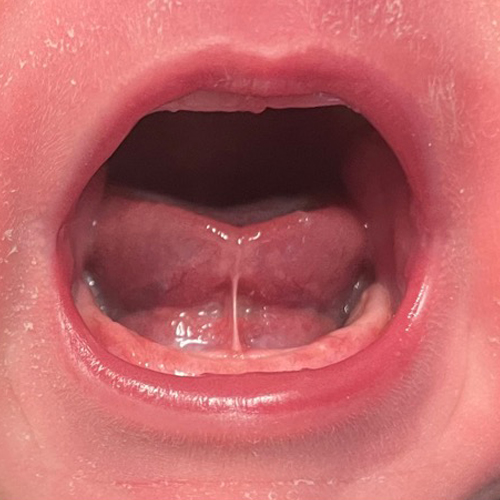
Before
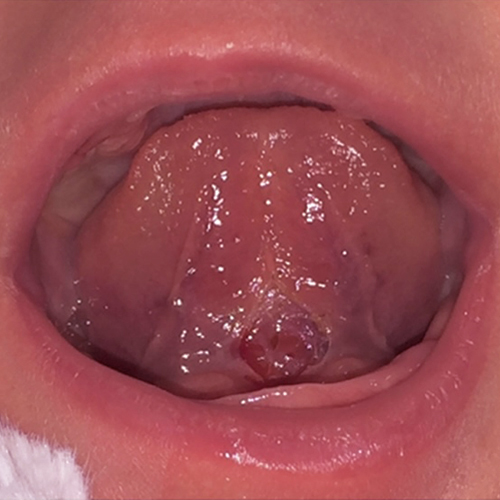
After
Ankyloglossia, or tongue-tie, is a condition in which tongue movement is restricted due to the frenum being fused or tightly attached to the floor of the mouth. This occurs when the frenum is abnormally short or attached too close to the tip of the tongue.
Normal tongue function is important for many reasons. It helps a baby latch properly and breastfeed effectively, supports normal speech development, and allows a child to naturally cleanse the mouth during eating. It also plays a key role in proper swallowing patterns and overall growth and development. Beyond these essential functions, normal tongue movement also makes simple, fun activities—like eating ice cream, kissing, or sticking your tongue out to catch snowflakes—possible.
Challenges That Can Occur With A Tongue-tie
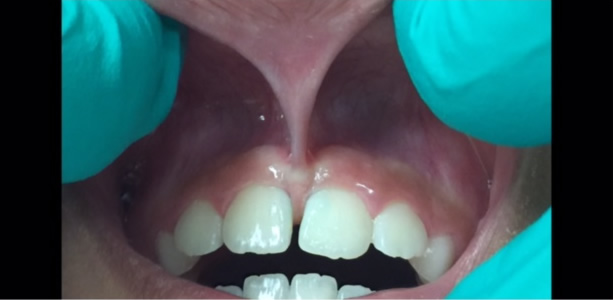
Before
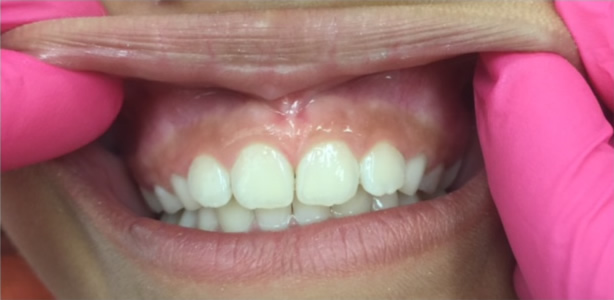
After
A lip-tie occurs when the upper lip remains attached to the upper gum. Challenges that can occur in children and infants with moderate to severe lip-ties include:
Many mothers are told—or may mistakenly assume—that something is wrong with them if they cannot successfully breastfeed. In many cases, this is not true. Infants may be born with conditions such as tongue-tie (ankyloglossia) and/or lip-tie, which can make breastfeeding more difficult.
Tongue-ties are often straightforward to diagnose and relatively easy to treat. A common sign is a heart-shaped tongue when the baby cries, along with a tight frenulum underneath that extends from the floor of the mouth to near the tip of the tongue. Tongue-ties can vary in severity and may include what is known as a “posterior tongue-tie,” which is more difficult to recognize. In these cases, the frenulum may appear almost nonexistent, making the condition easy to overlook. Instead, the tongue may look squared off, with the floor of the mouth appearing to web or tent the tongue. The edges of the tongue may form a cup when the infant cries, as the tongue cannot elevate properly, and it may twist rather than move side to side. Most notably, the tongue may be unable to extend outward when the mouth is wide open—an important position for effective breastfeeding.
Mothers attempting to breastfeed a tongue-tied baby may experience significant physical and emotional strain. Feedings can be prolonged, with frequent relatching, and may lead to sore, cracked, or bruised nipples, as well as pain during nursing. There may also be an increased risk of breast infections, and milk supply can decrease due to insufficient stimulation from an ineffective latch.
Babies with tongue-tie may struggle as well. They may lose weight, become sleepy during feeds due to the extra effort required to stay latched, and experience gas and irritability. Lip-tied babies may develop blisters on their lips from the effort of maintaining a latch. Because feeding is less efficient, affected babies often need to feed more frequently, as they may not get enough milk during each session.
Why Should I Have My Baby's Tongue-Tie and/or Lip-Tie Released?
Breastfeeding immediately after the procedure is encouraged, as breast milk contains antibodies and anti-inflammatory properties that support healing. In addition, the act of breastfeeding can help reassure and soothe your baby.
It is possible that latching may be difficult at first, as a small amount of anesthetic is used during the procedure. This is normal and should not be a cause for concern. The numbness typically wears off within 30–45 minutes.
In cases of posterior tongue-tie, it may take a few weeks of practice before the full benefits of the frenectomy are noticeable. We recommend closely following the prescribed post-treatment exercise plan and working with a lactation consultant. In some cases, support from a bodyworker—such as a craniosacral therapist or pediatric chiropractor—may also help improve outcomes.

Please view the following videos for examples of how to do them properly.
Principles of Oral Wound Healing
Post-procedure stretches are essential for achieving optimal results. The mouth heals very quickly, which can cause the frenum to prematurely reattach, leading to renewed restriction or the persistence or return of symptoms.
As healing occurs, wounds naturally contract toward their center, and raw surfaces in close proximity may reattach. For this reason, it is important to keep the area gently stretched to support proper healing and prevent reattachment.
Active Wound Management - Stretching Exercises
As you perform these exercises, it is important to remain relaxed, positive, and reassuring. Your baby or child will take cues from you, so maintaining a calm and encouraging approach helps show that there is nothing to fear.
The exercises should not be forceful or prolonged. Instead, gentle, quick, and precise movements are most effective. A small amount of spotting or bleeding is normal during these exercises, especially within the first few days.
The upper lip is typically the easier of the two frenectomy sites to stretch. If both the lip and tongue were treated, begin with the lip.
Place a clean finger under the upper lip and gently lift it as high as it will comfortably go, until you feel resistance. Then, gently sweep your finger side to side for several seconds.
The goal is to keep the inner surface of the lip and the gum separated, preventing them from reattaching during healing.


Insert your index finger under the tongue and gently lift it toward the roof of your baby’s mouth. The tongue requires three specific stretching motions to help prevent the diamond-shaped wound from reattaching as it heals:
First, once your finger is under the tongue, lift the back (posterior) portion of the tongue as high as it will comfortably go toward the palate. Hold for about 3 seconds, then relax and repeat. The goal is to fully open the diamond-shaped area so it is clearly visible. The fold across the center is the most common place for reattachment to occur.
Next, place your finger in the center of the diamond and perform a gentle circular motion for several seconds. This helps keep the area open and prevents it from closing prematurely.
Finally, turn your finger sideways and use a gentle “rolling pin” motion to help maintain the depth of the diamond. Start at the center fold and move outward toward the top and bottom edges. This motion helps loosen the muscles of the tongue and the floor of the mouth.

Dr. Soroush Zaghi, renowned ENT& Sleep surgeon, Founder of The Breathe Institute

Dr. Richard Baxter, author of The Tongue Tied book

Dr. Rumack with her UCLA co-resident Dr. Audrey Yoon, a pioneering sleep orthodontist and global leader in dentofacial sleep medicine.

Dr. Marianna Evans, renowned Airway Orthodontist and Periodontist

Dr. Rumack and Dr. Larry Kotlow, world- renowned specialist in laser frenectomies, at the International Affiliation of Tongue-tie Professionals meeting

Dr. Rumack and Dr. Bobby Ghaheri, an ENT physician and breastfeeding medicine specialist

Dr. James Murphy, Pediatrician and Breastfeeding Medicine Specialist

Dr. Rumack and Dr. James Jesse, a well-known specialist in the field of laser frenectomies
